Table of contents
.svg)
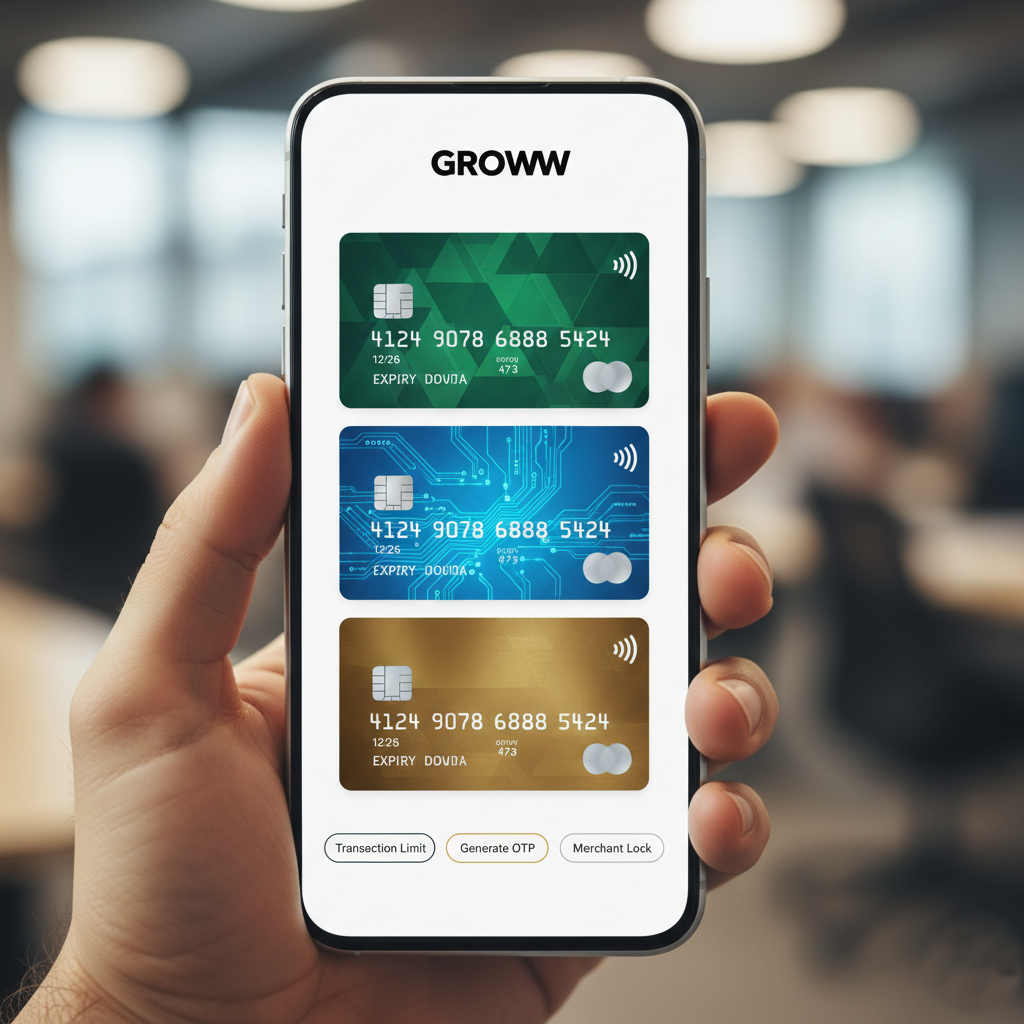
It’s a digital version of a credit card.
No plastic. No physical card.
Just numbers on a screen.
But it works like a regular credit card.
What Does a Virtual Credit Card Mean?
A virtual credit card is a temporary or digital card number issued by a bank.
It is used mainly for:
- Online shopping
- Subscription payments
- Digital transactions
It has:
- A 16-digit card number
- Expiry date
- CVV
Just like a normal card.
The difference?
It exists only online.
Who Issues Virtual Credit Cards?
Many banks and financial platforms offer virtual credit cards.
Banks like HDFC Bank, ICICI Bank, and Axis Bank provide virtual card options linked to existing credit cards or accounts.
Some fintech apps also generate single-use virtual cards.
The idea is security.
How Does a Virtual Credit Card Work?
The process is simple.
- Log in to bank app or website
- Generate a virtual card
- Set spending limit (if allowed)
- Use it for online payment
The amount gets charged to the main credit card account.
Virtual card acts as a layer in between.
Think of it like a shield.
Why Use a Virtual Credit Card?
The biggest reason is safety.
Virtual cards help:
- Protect main card details
- Reduce fraud risk
- Avoid misuse on unknown websites
- Control spending
If a website gets hacked, the main card remains safe.
That’s the key benefit.
An Example
Subscription sign-up on a new website.
Instead of entering the primary credit card number, a virtual card is generated with:
- ₹2,000 limit
- Short validity
If the site attempts extra charge, it fails.
Main card stays protected.
Small step. Big safety.
Types of Virtual Credit Cards
There are usually two types:
1. Linked Virtual Card
- Connected to an existing credit card
- Uses same credit limit
- Works like a digital copy
2. Single-Use or Limited Card
- Created for one transaction
- Has limited validity
- Expires automatically
Single-use cards offer higher protection.
Once used, they disappear.
Does a Virtual Credit Card Have a Separate Limit?
Usually no.
It shares the limit of the main credit card.
However, some banks allow:
- Setting a transaction limit
- Setting expiry date
- Restricting usage to specific merchants
This adds extra control.
Can a Virtual Credit Card Be Used Offline?
No.
Virtual credit cards are mainly for:
- Online payments
- App purchases
- Subscription billing
They cannot be swiped at physical POS machines.
No physical card. No chip. No tap.
Purely digital.
Is It Different From Add-On Card?
Yes.
Add-on card:
- Issued physically
- Has separate card number
- Given to family members
Virtual card:
- Exists only digitally
- Usually temporary
- Linked to main account
Different purpose. Different use case.
Does It Affect Credit Score?
No.
Using a virtual credit card affects credit score only if:
- Bills are not paid
- High utilisation occurs
Otherwise, it behaves like a normal credit card.
The virtual format doesn’t change credit history.
Are Virtual Credit Cards Free?
Often yes.
Most banks provide virtual cards:
- Free of cost
- As a feature within mobile app
Some fintech services may charge small fees.
Always check terms.
Are Virtual Cards Safe?
They are safer for online use.
Why?
- Main card details remain hidden
- Limits can be controlled
- Temporary cards reduce long-term risk
But they are not immune to misuse.
Sharing OTP still causes fraud.
Security habits still matter.
Can It Be Used for International Payments?
Yes, if international usage is enabled.
But some banks:
- Restrict cross-border use
- Require activation
Settings must be checked before use.
What Happens If Virtual Card Is Misused?
If fraud occurs:
- Virtual card can be blocked
- Main card may remain safe
- Dispute can be raised
Damage is usually limited to set transaction limit.
That’s the advantage.
FAQ
Is a virtual credit card the same as a physical card?
No, it exists only digitally.
Can a virtual credit card be used multiple times?
Depends on type. Some are reusable, some are single-use.
Does it have CVV and expiry date?
Yes, just like a regular credit card.
In Short
A virtual credit card is a digital version of a credit card used mainly for online payments.
It protects main card details and reduces fraud risk.
Same account. Extra safety layer.
Still wondering whether virtual cards are better for subscriptions and online shopping?